
You pull a finished piece off the print bed and instead of clean surfaces, you find thin webs of plastic strung between towers, or small blobs of extra material around the printed parts. This issue, known as 3D print stringing, is often caused by moisture in the filament.
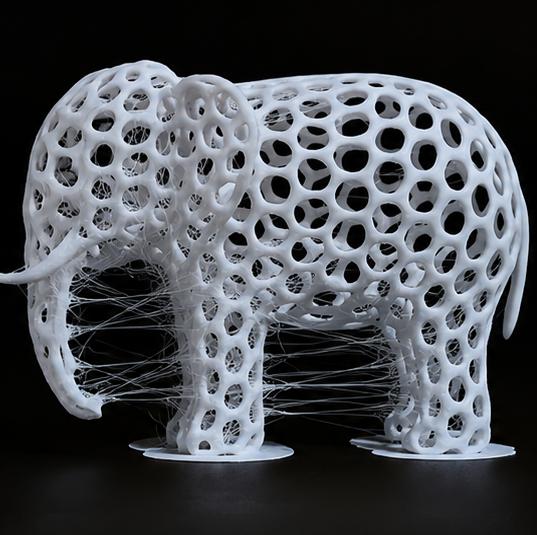
How Moisture Leads to 3D Print Stringing
3D printer filament is made from polymers, and many of these materials are hygroscopic, which means they naturally absorb water from the surrounding air.
When wet filament enters the hot end, the absorbed moisture vaporizes into steam. The steam can create bubbles and disrupt extrusion, causing the molten plastic to flow unevenly or continue to ooze during travel moves.
You may hear faint popping or hissing sounds from the nozzle, and this inconsistent extrusion can leave thin strings between separate features. It can also produce a rough, bubbly, or unusually glossy surface and weaken layer adhesion, depending on the material’s moisture sensitivity.
How to Prevent Moisture-Related Stringing
The good news is that moisture-related 3D print stringing can often be prevented or reduced. A few practices can keep your filament for 3D printer projects in good condition.
1. Dry the Filament Before Printing
If a spool has been open for a while, or if you notice stringing, bubbling, or whitening on your prints, dry the filament at the recommended temperature before your next print. This helps remove absorbed moisture and restore the filament’s printability.
2. Store Spools in Airtight Containers
Sealed bins, dry boxes, or vacuum bags reduce the filament’s exposure to humid air. Keep the container sealed whenever the spool is not in use.
3. Use Desiccants
Silica gel packs or other desiccants placed inside storage containers help absorb moisture from the air. Replace disposable desiccants regularly and recharge reusable ones as needed.
4. Keep Filament Away from Humid Environments
Avoid storing spools in areas with high humidity, such as bathrooms and kitchens. A stable, dry environment helps preserve filament quality and reduces the risk of 3D print stringing.
How to Choose a Filament Dryer
A dedicated filament dryer makes moisture control easier and more consistent, but not all dryers perform the same way. Several factors are worth considering when comparing different options.
1. Temperature Range
Different materials require different drying temperatures. PLA generally dries at a lower temperature, while nylon and PC typically require higher heat. Choose a dryer that provides accurate, stable, and adjustable temperature control while covering the recommended drying ranges of the materials you use.
2. Drying Capacity
Consider how many spools you typically use at once. A single-spool dryer may not be enough if you run multiple printers or need to switch between different filaments for multicolor prints.
3. Airflow Design
Check whether the dryer has an effective airflow design. Even heat distribution is just as important as the temperature setting. Poor airflow can leave some parts of the spool insufficiently dried even after a full drying cycle.
4. Spool Compatibility
Filament spools come in different diameters and widths. Check that the dryer chamber can accommodate the spool sizes and brands you already use or plan to buy.
5. Smart Features
Filament dryers often require adjustments based on the material and room humidity. Features such as humidity monitoring, programmable timers, and automatic shutoff can simplify the process and reduce the risk of incomplete or excessive drying.
Why Choose SUNLU AMS Lite Heater
At SUNLU, we designed the SUNLU AMS Lite Heater to help users achieve better printing results. Compatible with AMS Bambu A1, A1 Mini, and A2L, it combines simultaneous drying and printing with adjustable heat, automatic moisture release, smart humidity control, and even airflow.
1. Simultaneous Drying and Printing
The SUNLU AMS Lite Heater supports simultaneous filament drying and 3D printing. This reduces the delay between filament preparation and print production. It also helps protect moisture-sensitive material throughout long jobs, when an exposed spool might absorb water from the room again.
2. Automatic Air Valve
An automatic air valve releases humid air from the chamber during a drying cycle. Water vapor can escape instead of remaining inside the enclosure. The user does not need to manually open and close a vent.
3. 35°C to 70°C Temperature Range
The temperature range extends from 35°C to 70°C. It supports common materials such as PLA, PETG, ABS, ASA, PA, and PC. Users can select a suitable temperature and set the heat duration for the loaded material.
4. Smart Humidity Control
A built-in sensor monitors relative humidity inside the chamber in real time. Users can set a humidity threshold, and the heater can automatically activate when the chamber exceeds that level. This feature helps maintain a more stable environment between print jobs.
5. Dual-Sided, Dual-Air-Duct Design
The SUNLU AMS Lite Heater uses airflow from both sides and two air ducts to distribute warm air throughout the chamber. This layout helps reduce hot and cool spots around the four spool positions.
6. Multiple Safety Protections
We use several layers of protection, including a self-regulating PTC heater, temperature protection, software controls, temperature monitoring, and door-open detection. These safeguards help control abnormal heat and support regular use during extended print jobs.
7. Four PTFE Tubes
The package includes four extra 1.2-meter PTFE tubes. Each tube guides one filament path from the AMS Lite Heater to the printer. The added length provides more freedom for equipment placement and makes access to the heater doors more practical.
Conclusion
Moisture is easy to overlook, but it can have a noticeable effect on 3D print quality. If 3D print stringing, popping, bubbling, or rough extrusion persists, check the condition of your filament. Proper drying and sealed storage can reduce moisture-related defects and help maintain consistent extrusion.
For users looking for a reliable filament drying solution, the SUNLU AMS Lite Heater offers adjustable heating, humidity monitoring, controlled airflow, and other advanced features. Visit the SUNLU AMS Lite Heater product page and order yours today.