Creative Projects
Building a Full-Scale Cat Wheel with 3D Printing: A 10+ kg SUNLU PETG Project
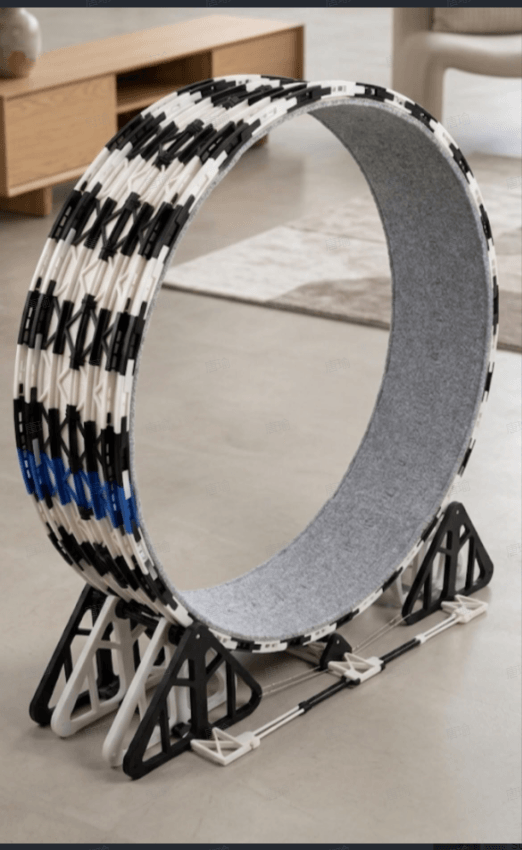
From a large-scale 3D printing challenge to a custom cat wheel made especially for Clio.Earlier this year, a 3D printing enthusiast decided to build a full-scale cat wheel for their pet cat, Clio, providing her with a practical way to stay active, burn off energy, and get regular exercise.Unlike a typical 3D-printed model designed primarily for appearance, this project needed to withstand the movement and impact of everyday use. As a result, structural strength, durability, and overall assembly reliability were among the most important considerations.Including the prototypes produced during the development process, the entire project required more than 10 kg of 3D printing filament.A Large-Scale 3D Printing Project Using More Than 10 kg of FilamentBecause of the size of the cat wheel, the project required a large number of structural components to be printed. To ensure that the finished product offered both reliable structural performance and a clean, streamlined appearance, the creator chose SUNLU PETG filament in black, white, and blue.With its excellent toughness and durability, PETG was a suitable choice for this functional project. The combination of different colors also gave the completed cat wheel a clean and cohesive appearance while maintaining its functional requirements.For a project of this scale, however, the material itself was only part of the challenge.Since the printing process ran continuously for several days, maintaining consistent filament condition throughout the extended printing process was equally important to the success of the project.Long Print Times Made Filament Drying EssentialDuring continuous printing over several days, filament can be affected by moisture in the surrounding environment. Keeping the filament dry before and during printing was therefore essential for achieving consistent print quality.The creator used a SUNLU SP2 Filament Dryer throughout the project.The SP2 was previously sent by SUNLU as a prize after the creator won one of SUNLU's competitions. With its heating and drying function, the creator was able to dry the filament before and during printing, helping maintain consistent filament condition.For a large-scale project requiring several days of continuous printing, maintaining stable filament quality was especially important.According to the creator, using the SP2 to remove moisture from the filament played an important role in achieving smooth surface finishes and strong layer adhesion, helping maintain consistent print quality across every component.“Using the heater to remove moisture from the spools before and during the process was essential for achieving smooth surface finishes and strong layer adhesion across every segment of the wheel.”From Individual Printed Parts to Final Assembly: Reliability at Every StageThe components of the cat wheel were printed using both a Creality Ender 5 Pro and a K1C.After days of continuous printing, the large number of individual components had to be assembled into the finished wheel. Fortunately, all of the parts fit together smoothly and precisely.Even more impressively, the project took the application of 3D printing one step further: the bearings used in the cat wheel were also 3D printed.This means the project was far more than a large-scale decorative model. It was a genuine functional 3D printing project designed for real-world use.Once fully assembled, the cat wheel was able to withstand the movement and activity of Clio's daily runs.Even when Clio goes into full “zoomies” mode, the wheel continues to hold up reliably.From a Large-Scale Printing Challenge to a Real-World Functional ProductFor the creator, the significance of this project goes far beyond simply “successfully printing a large cat wheel.”It represents a complete 3D printing engineering project:From prototype development and large-scale printing with more than 10 kg of filament, to continuous multi-day operation, filament drying, and final assembly, every stage required consistency and reliability.SUNLU PETG provided the material performance needed throughout the project, while the SUNLU SP2 helped maintain consistent filament condition during the extended printing process.Ultimately, a standard 3D printer became more than a tool for making models. It became an important part of creating a functional product that could be used by a real pet in everyday life.