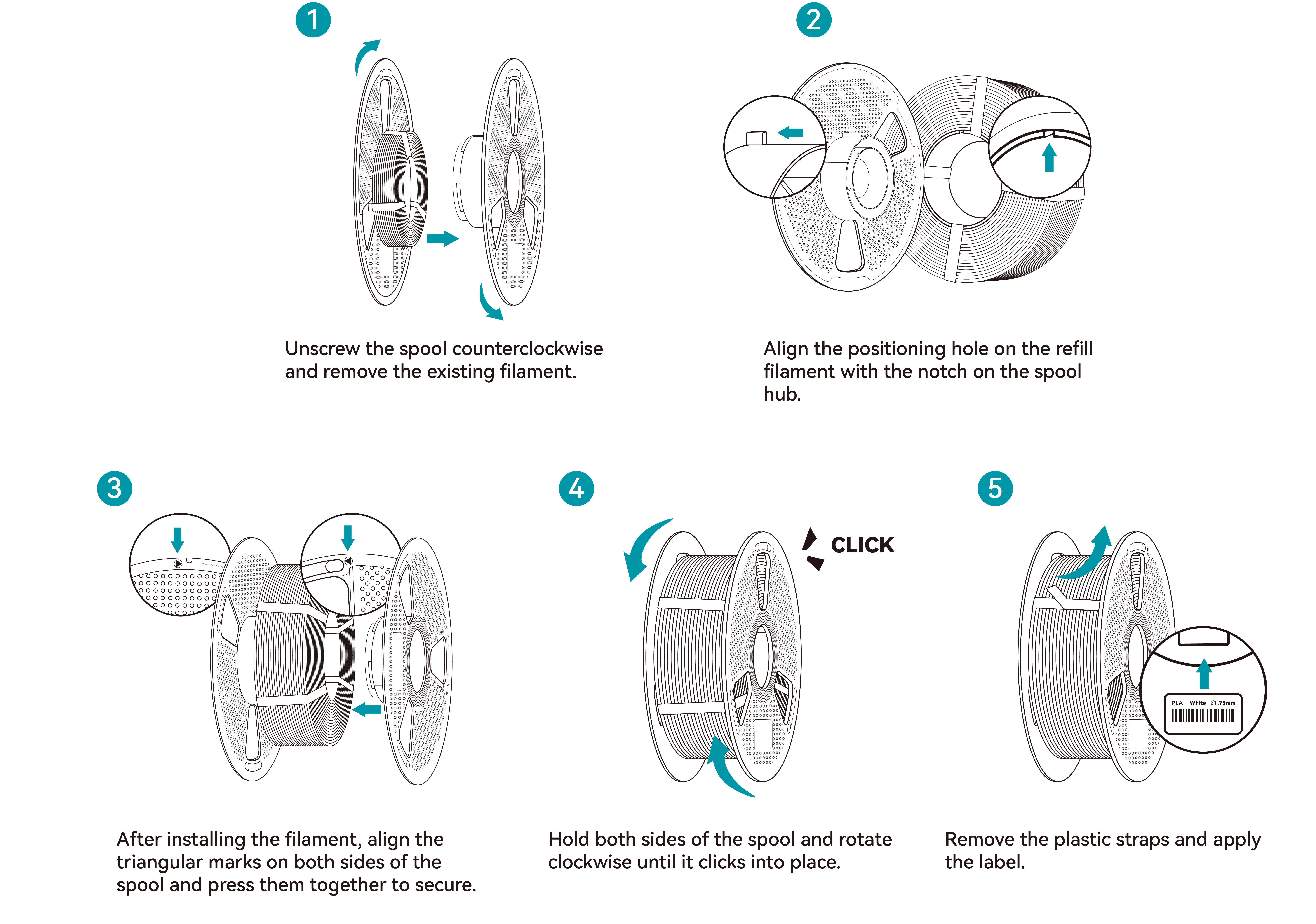
Have you learned it?


Have you learned it?

Thank You, RMRRF 2026 — See What’s Next with SUNLURMRRF 2026 has officially come to a close, and we want to extend our sincere thanks to everyone who visited the SUNLU booth in Loveland, Colorado.Over the course of the event, we had the opportunity to meet passionate makers, engineers, creators, and 3D printing enthusiasts from across the community. Every conversation, product discussion, and piece of feedback helped make this exhibition an unforgettable experience.Connecting Innovation with CreativityAt SUNLU, our mission has always been to make 3D printing more accessible, reliable, and enjoyable. RMRRF provided the perfect opportunity to showcase our latest materials and solutions while learning directly from the people who use them every day.From high-quality filaments and engineering-grade materials to printing accessories designed to improve workflow and print quality, we were excited to share how SUNLU continues to support creators at every stage of their 3D printing journey.From Boston to ColoradoFollowing an incredible experience at Rapid + TCT in Boston, RMRRF marked another important stop in our 2026 exhibition journey.Each event brings new ideas, new partnerships, and valuable insights that help shape the future of our products. Seeing the creativity and passion of the maker community continues to inspire us to push boundaries and develop even better solutions for our users worldwide.Looking AheadWhile RMRRF may be over, our journey is far from finished.SUNLU remains committed to delivering innovative filaments, advanced materials, and practical 3D printing solutions that help makers achieve more with every print. We have exciting new products, technologies, and community activities planned for the months ahead, and we can't wait to share them with you.To everyone who stopped by our booth, shared feedback, or simply came to say hello—thank you for being part of the SUNLU CommunityWe look forward to seeing you at our next event and continuing to build the future of 3D printing together.Stay creative. Stay inspired. Keep printing with SUNLU. 🚀 https://x.com/sunluofficial/status/2046142122533994512?s=20

TCT Asia 2026 Kicks Off in Shanghai: SUNLU Unveils a New Era of Material InnovationOn March 17, 2026, TCT Asia (Asia’s leading 3D printing and additive manufacturing exhibition) officially opened at the National Exhibition and Convention Center in Shanghai, launching a grand showcase of cutting-edge industry innovations.Under the theme “A Complete Evolution from Texture to Performance,” SUNLU made a powerful appearance with its full lineup of core products alongside several major new releases. On opening day, the booth was packed with visitors—from industry professionals and designers to engineers, makers, and tech enthusiasts—all gathering to explore next-generation materials, exchange insights, and discuss the future of 3D printing applications.Six Themed Zones: From Material Innovation to Real-World ApplicationsAt this year’s exhibition, SUNLU presented a comprehensive experience across six dedicated zones:New Releases – Engineering Materials – Functional Materials – Aesthetic Materials – Resins – Electronic Accessories🚀 New Releases: Redefining the Printing ExperienceThe spotlight was on SUNLU’s latest innovations, including:PETG 2.0, PP 2.0, Silk PLA+ Silk 2.0, PLA Transparent 2.0, and PLA MetallicThese upgraded FDM materials drew significant attention, with industry experts and designers engaging in in-depth discussions about their performance advantages and real-world applications. The five newly launched filaments received strong recognition from visitors.🏗 Engineering Materials: Pushing Performance BoundariesHigh-performance materials such as PA6-CF and flame-retardant ABS (ABS-FR) demonstrated exceptional strength and reliability for industries like aerospace, automotive, and manufacturing.A large-scale go-kart model on display became a major highlight. Printed using PA6-CF and PA12-CF, it showcased outstanding rigidity and structural strength. Electrical components made with ABS-FR (V0-rated flame retardancy, impact resistance, and low warping) provided robust protection for the system. The model can reach speeds of up to 80 km/h, proving the real-world capabilities of engineering-grade filaments.⚙️ Functional Materials: Enabling Versatile ApplicationsMaterials such as Lightweight PLA, PETG-CF, and TPU offer a balance of strength, durability, and flexibility for diverse applications.Aircraft models printed with Lightweight PLA and ABS demonstrated both lightness and strengthFlexible TPU samples allowed visitors to experience varying levels of elasticity firsthandFrom drone components to creative structural parts, functional materials are expanding the possibilities of 3D printing across industries.🎨 Esthetic Materials: Where Creativity Meets CraftsmanshipThe aesthetic materials zone became a vibrant hub of creativity.From silk filaments with glossy finishes to transparent rainbow effects and wood-like textures, these materials are widely used in fashion, art, collectibles, and creative design.Exhibits such as lion dance sculptures and artistic lampshades captivated visitors with their stunning visual effects, making this area a popular photo spot. More than just materials, this zone offered an immersive experience of design and artistic expression through 3D printing.🧪 Resin Materials: Precision Meets DetailModels printed with CMYK+W color resins, 14K ABS-like resin, and High-Temp Plus resin showcased exceptional detail and surface quality.From figurines to industrial components, the resin display area attracted significant attention. Intricate pieces like fridge magnets and detailed dragon models highlighted the high precision and premium finish achievable with SUNLU resins.🔌 Electronics & Accessories: Elevating Print QualityVisitors showed strong interest in SUNLU’s latest and flagship devices, including:S4 Pro Filament Dryer (New)AMS HeaterE2 Dryer (Designed for Engineering Materials)Classic models: S4 & SP2 DryersThrough live demonstrations and consultations, SUNLU showcased how proper filament drying and storage can significantly improve print quality and consistency.🎯 Interactive Experience & Crowd Favorite HighlightsSUNLU also collaborated with MAKEROAD to launch the “Dream Racetrack Sandbox”, featuring a dynamic racing scene powered by 3D printed components made from PA6-CF. The model’s intricate structure and striking design made it one of the most popular attractions at the booth.The excitement peaked at the interactive game zone, where visitors could participate in activities and win prizes, including electronic devices, premium filaments, and creative merchandise. With limited daily giveaways, the booth maintained a lively and energetic atmosphere throughout the day.🔥 A Booth Full of Energy and InnovationOn the first day, SUNLU’s booth remained vibrant and fully engaged. From material science to real-world applications, from technical discussions to creative inspiration, every corner was filled with meaningful exchanges.From texture to performance, innovation to application, SUNLU continues to drive forward the future of 3D printing through collaboration and innovation.📍 Visit SUNLU at TCT Asia 2026March 18 : 9:00 – 17:30March 19 : 9:00 – 15:00Booth: 8E56, Hall 8.1Venue: National Exhibition and Convention Center (Shanghai)

Most 3D printing enthusiasts are familiar with the standard trio of PLA, ABS, and PETG. However, when an engineering project demands a part that can survive a medical autoclave or the corrosive heat of an engine bay, these standard plastics hit a wall.PEEK filament bridges this gap, offering a lightweight, high-strength alternative to metal CNC machining. This guide breaks down the essential thermal demands, hardware requirements, and expert techniques you need to move beyond hobbyist plastics and master true engineering-grade production.1. What Is PEEK Filament?PEEK is a high-performance semi-crystalline thermoplastic in the PAEK family. Unlike amorphous plastics like ABS or Polycarbonate that soften gradually as they heat up, PEEK remains rigid until it is very close to its melting point. This stability allows it to maintain structural integrity in environments that would cause standard filaments to deform or melt completely.The Crystallization Factor: The Secret to PEEK’s StrengthThe performance of PEEK filament isn’t just about the raw material; it is a result of its molecular geometry. As the plastic cools from a molten state, the polymer chains organize into tight, repetitive crystalline patterns.To understand how a part will behave under load, you have to look at the two states existing within the same part:Crystalline Regions: Tightly packed structures that act as internal reinforcement, providing legendary chemical resistance and high mechanical stiffness.Amorphous Regions: Disorganized areas between crystals that act as a buffer, providing the impact resistance and flexibility needed to prevent the part from becoming brittle.When these two states are balanced correctly, the result is a Performance Profile built for survival: extreme thermal stability, immunity to corrosive chemicals, and a strength-to-weight ratio that allows it to replace certain steel or aluminum components.2. Industrial Applications: Why Makers are Swapping Metal for PEEKAerospace and automotive engineers have shifted toward PEEK filament because it solves structural problems that metals simply cannot. For specialized developers and engineering firms, this material provides a path to professional-grade prototyping without the lead times or costs associated with traditional machining.Corrosion Resistance and Weight SavingsUnlike steel or aluminum, PEEK does not oxidize or rust. In subsea environments or chemical processing, PEEK components often outlast treated steel. Additionally, the ability to 3D print complex lattice structures allows you to reduce part weight significantly without sacrificing structural rigidity.Medical Grade Safety and RadiolucencyPEEK is radiolucent, meaning it produces minimal interference in X-ray or CT scans. This, combined with its ability to withstand repeated steam sterilization, makes it the gold standard for surgical guides, dental tools, and customized medical implants.3. Does Your Printer Meet the PEEK Standard?Before purchasing your first spool, it is important to realize that PEEK filament is not a plug-and-play material. It is designed for experienced users with professional-grade hardware. Attempting to use a standard consumer printer will likely lead to failed prints and can cause permanent damage to your machine through overheating.To get the full strength out of the material, your printer must maintain a stable thermal environment that prevents quenching. Quenching occurs when the plastic cools too rapidly, preventing the polymer from forming its necessary crystalline structure. To avoid this, your printer must meet three specific temperature standards.The High-Temperature Extrusion SystemStandard hotends with PTFE liners are a safety hazard at PEEK temperatures; they decompose and release toxic fumes above 250°C. An all-metal hotend is mandatory.Temperature Benchmarks: A baseline of 390°C is required for precision printing, while high-flow rates may require up to 420°C.The Nozzle: Hardened steel or bimetallic nozzles are essential. PEEK filament has a high melt viscosity that standard brass nozzles cannot handle under these sustained thermal loads.High-Adhesion Build PlatesPEEK shrinks significantly as it transitions from a liquid to a solid. To prevent the first layer from curling or lifting off the plate, you need a stable bed temperature between 110°C and 120°C.Adhesion Strategy: Standard glue sticks usually fail or evaporate at these temperatures. You should use a high-adhesion curing adhesive specifically formulated for high-performance polymers to ensure the part remains anchored.Actively Heated ChambersThe heated chamber is the most critical part of the hardware setup. If the ambient air around the part is too cool, the layers contract at different rates, leading to delamination—essentially causing the part to split between layers.Stress Management: An active chamber (maintaining 70°C to 150°C) ensures the part stays in a stress-relieved state. Without this controlled environment, achieving the material's maximum mechanical strength is virtually impossible.4. How Do You Achieve Professional Results with PEEK?Successful prints with PEEK filament are won during the preparation phase. Most failures occur before the nozzle even starts moving because a critical prep step was skipped.Mandatory Dehydration and StoragePEEK is hygroscopic, meaning it actively absorbs moisture from the environment. Any water trapped in the filament will flash into steam inside the hotend, causing surface bubbles, internal voids, and weak layer fusion.The Drying Cycle: Dry the filament at 110°C to 140°C for at least 4 to 6 hours before loading it.Active Humidity Control: High-performance parts require the filament to stay under 20% relative humidity during the entire print. Always feed the extruder directly from a sealed dry box.Slicing for Structural IntegrityYour slicer settings must prioritize thermal stability over raw speed.Consistent Print Speed: Stay within the 30 to 60 mm/s range. This provides the necessary time for the layers to fuse at the molecular level.Precision Retraction: Keep retractions short (1 to 1.5 mm) and fast (30 to 40 mm/s). Because of the extreme heat, pulling molten plastic too far into the cold zone will cause a permanent jam.The Zero-Fan Rule: Keep cooling fans at 0%. Any localized airflow causes thermal shock, which ruins crystallization and triggers aggressive warping.The Crystallization Color TestThe visual appearance of your part is the first indicator of its mechanical quality.Beige or Opaque Tan: This is the goal. It indicates successful semi-crystallization and full strength.Translucent or Dark Brown: This indicates quenching. The material cooled too quickly, leaving it in an amorphous state that is brittle and lacks heat resistance.5. Post-Processing: Maximizing Strength Through AnnealingEven a perfect-looking print often contains internal stresses caused by the layer-by-layer cooling process. To reach the full mechanical potential of PEEK filament, a post-print anneal is usually required. A Professional Annealing Schedule:Initial Ramp: Slowly increase the oven temperature to 150°C.The Soak: Hold this temperature for 1 hour for every 5mm of wall thickness.Controlled Ramp Down: This is the most critical step. Cool the part very slowly—no more than 10°C per hour—until it reaches room temperature.Troubleshooting PEEK Printing IssuesIssueRoot CauseSolutionPart Warping/LiftingBed temp too low or uneven coolingIncrease bed to 120°C; check chamber sealsInterlayer SplittingChamber temp too low (Delamination)Increase active chamber heat to 90°C+Surface BubblesWet filamentDry PEEK filament at 120°C for 6 hoursPart is dark/brittleRapid quenchingDisable all fans; ensure slow cooling in chamberFinal Thoughts3D printing with PEEK filament is a significant jump from standard desktop manufacturing. It requires a shift in mindset, from simply hitting "print" to managing complex thermal cycles and material science. While the hardware requirements and preparation protocols are demanding, the payoff is the ability to produce parts that outperform many metals. If your project requires the absolute limit of what polymers can achieve, the precision and patience required to master this high-performance material are well worth the investment.Frequently Asked Questions1. Can I print PEEK on an enclosed hobbyist printer? Probably not. Even if you upgrade the hotend, the lack of an actively heated chamber means you are limited to very small parts. Anything larger will inevitably warp or split.2. What is the actual melting point of PEEK?Most industrial grades of PEEK filament melt at 343°C, which is why a high-temp extruder is a requirement.3. Why is my part brown instead of tan? Your part quenched. This means the ambient temperature was too low or it cooled too quickly. You need to increase your chamber heat.4. How long do I really need to dry the filament? Do not cut corners here. 110°C – 140°C for 4 – 6 hours is the standard. If you see bubbles in your print, it’s still wet.5. How do I get PEEK parts off the bed? Wait for the bed to cool completely to room temperature. Attempting to remove a hot PEEK part will often tear your build surface or deform the part's base.