
ブログ

最新の3Dプリンティング業界ニュースや専門家の知見をお届けし、より充実した体験をサポートします。SUNLUは、世界各地の展示会やイベントへの積極的な参加、高品質な材料の提供、そして世界中のお客様へのサービス向上への取り組みを通じて、常に業界の最前線を走り続けています。

PP vs PP 2.0 Filament: What’s Changed in Printability, Toughness, and Performance?

Products Review

PP vs PP 2.0 Filament: What’s Changed in Printability, Toughness, and Performance?

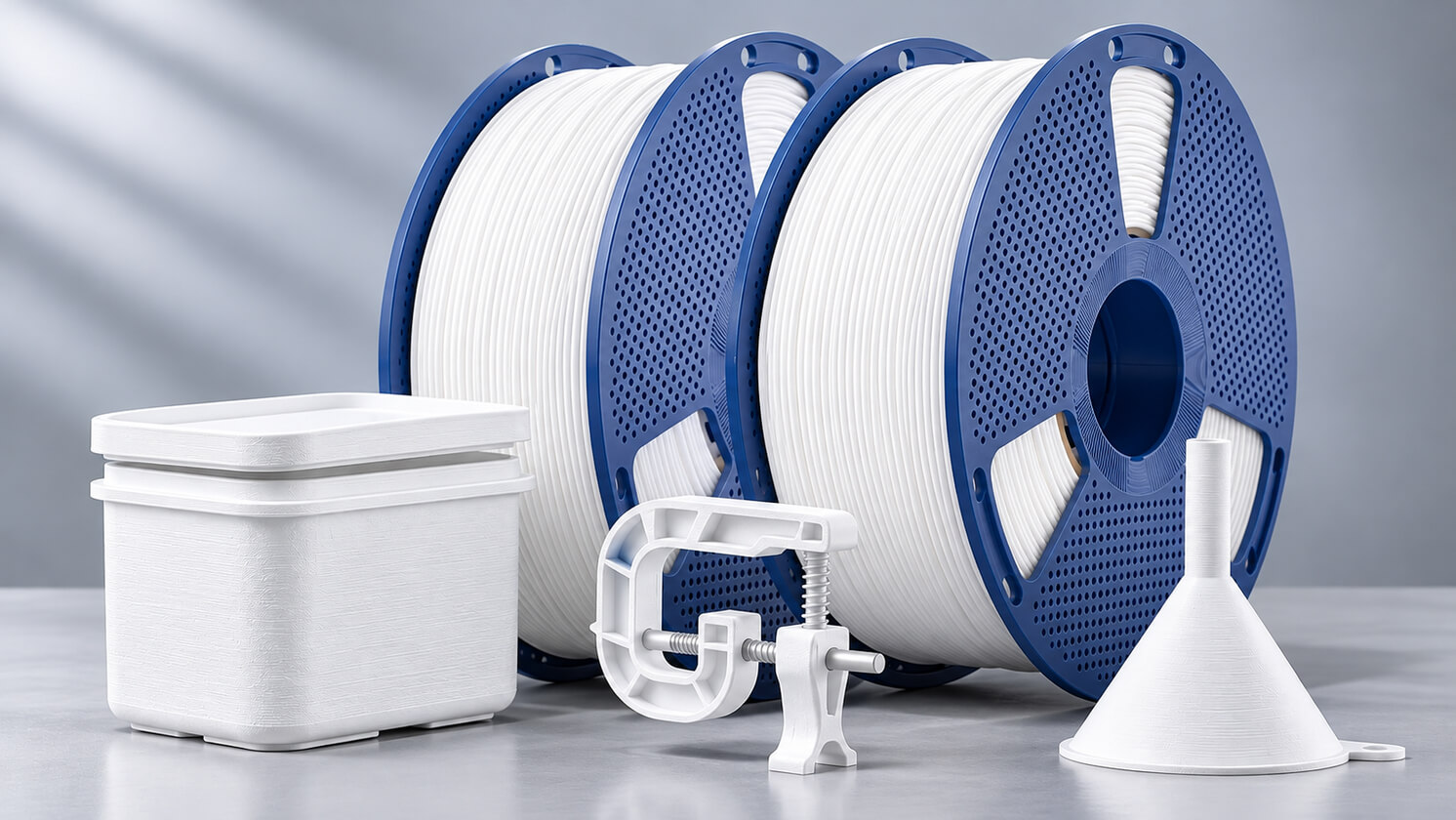
Polypropylene (PP) is valued for its low density, toughness, fatigue resistance, and chemical resistance. These properties make it useful for functional parts such as living hinges, flexible containers, protective components, and parts exposed to repeated movement.However, PP can be difficult to print consistently. Many users experience lifted corners, bed detachment, layer cracking, or dimensional changes when printing PP filaments. At SUNLU, we have optimized the formula and introduced SUNLU PP 2.0, which is easier to print than SUNLU PP and provides much higher impact strength. Read on to find out what has changed between SUNLU PP and PP 2.0 in terms of printability, toughness, and overall performance.Why Is PP Filament Difficult to Print?But first, let’s take a step back and discuss why PP is difficult to print. Two characteristics of PP account for most printing problems: its semi-crystalline structure and low surface energy.1. Semi-crystalline Shrinkage Creates Internal StressPP is a semi-crystalline polymer. When the extruded PP cools, some of its molecular chains change from a disordered state into more organized crystalline regions. This process causes the material to contract. Because each layer and area of a part experiences a different thermal history, depending on its distance from the heated bed, its exposure to the air, and the airflow from the cooling fan (if the use of cooling fans is recommended), it does not cool and crystallize at exactly the same rate. Corners, outer walls, lower layers, and thicker sections may therefore shrink by different amounts.Such uneven shrinkage creates internal stress. As this stress accumulates, it can pull the edges of the model upward, separate adjacent layers, or change the dimensions of the finished part. Large, flat, or wide models are especially sensitive because contraction occurs across a greater area.For this reason, PP printing is strongly affected by nozzle temperature, bed temperature, ambient temperature, cooling, and print speed.2. Low Surface Energy Makes First-Layer Adhesion DifficultPP is also a non-polar material with low surface energy. Molten PP filament does not easily wet or bond to common printing surfaces such as glass and PEI.If the first layer has weak adhesion, it may be unable to resist the contraction forces generated during cooling. The edges can begin to lift, and in more serious cases, the entire model may detach from the build plate.A suitable build surface and PP-compatible 3D printing glue can help the first layer remain in place while the part cools.What Has Changed in PP 2.0?Compared with SUNLU PP, PP 2.0 features an optimized formulation that results in the following differences in material properties and printing performance.PropertySUNLU PPSUNLU PP 2.0Molding Shrinkage1.50%1.36%Notched Izod Impact Strength5.3 ± 1.5 kJ/m²23 ± 5 kJ/m²Tensile Strength19 ± 3 MPa15 ± 3 MPaFlexural Strength19 ± 3 MPa18 ± 3 MPaElongation at Break850 ± 150%900 ± 300%Heat Deflection Temperature58.5 ± 3°C65 ± 10°CMelt Mass-Flow Rate9.75 ± 2 g/10 min4.4 ± 1 g/10 minDensity0.90 g/cm³1.01 g/cm³Shore Hardness54.5D60D The following four changes are particularly noticeable.1. Lower ShrinkagePP 2.0 3D printer filament has a molding shrinkage rate of 1.36%, compared with 1.50% for SUNLU PP. Its shrinkage rate is 0.14 percentage points lower, a difference of approximately 9.3%.Lower shrinkage produces less contraction stress as the printed material cools. This can reduce the likelihood of warping and dimensional deformation, especially when printing large, flat, or wide models.2. Higher ToughnessThe notched Izod impact strength of SUNLU PP 2.0 is 23 ± 5 kJ/m², compared with 5.3 ± 1.5 kJ/m² for SUNLU PP. The nominal value of PP 2.0 is approximately 4.3 times as high.This allows PP 2.0 to absorb more energy when a part is dropped, struck, or subjected to a sudden localized force. It is therefore suitable for clips, latches, protective housings, and frequently handled functional parts.3. Lower Tensile StrengthPP 2.0 has a tensile strength of 15 ± 3 MPa, compared with 19 ± 3 MPa for SUNLU PP. Its nominal tensile strength is approximately 21% lower.This means PP 2.0 is not always the more suitable option when a part must resist continuous pulling forces or when tensile strength is the main design priority. SUNLU PP may be more appropriate for these applications.4. Higher DensityThe density of PP 2.0 is 1.01 g/cm³, compared with approximately 0.90 g/cm³ for SUNLU PP. For parts of the same volume, PP 2.0 is approximately 12% heavier.The additional mass may be useful for bases, fixtures, or other components where greater weight and a more substantial feel are desirable. PP 2.0 3D printer filament may be less suitable for drones, RC aircraft, wearable parts, and other applications where low weight is important.Which Polypropylene 3D Printing Filament Should You Choose?PP 2.0 does not improve every property of SUNLU PP. It exchanges some tensile strength and low-density performance for lower shrinkage and much higher impact resistance. The choice should therefore be based on the requirements of the finished part.Choose SUNLU PP when low weight and tensile strength are the main requirements. Its lower density (about 0.90 g/cm³) suits lightweight housings and components that need to float, while its higher tensile strength (19 ± 3 MPa) helps parts that carry a steady pulling load. It also suits flexible containers and living hinges that are exposed to repeated bending or chemicals.It is also worth noting that SUNLU PP does not always warp or separate from the bed. Experienced users can greatly reduce the chance of these problems by carefully controlling temperature, cooling, print speed, and first-layer adhesion.Choose SUNLU PP 2.0 when impact resistance and print stability matter more than weight. Its notched impact strength of 23 ± 5 kJ/m² suits parts that face sudden loads, such as protective housings, clips, latches, and workshop fixtures. Its lower shrinkage (1.36%) also makes larger flat parts easier to print with less warping.How to Get Better Printing Results with PP 2.0We recommend a nozzle temperature of 240–260°C, a bed temperature of 40°C, and a printing-speed range of 30–170 mm/s for PP 2.0. The recommended retraction distance is 0.8–1.2 mm, with a retraction speed of 30–40 mm/s.Use these values as a starting point, together with the following practices, to improve your PP 2.0 printing results:Apply a thin, even layer of PP-specific glue or PP-compatible 3D printing adhesive to improve first-layer adhesion.Print the first layer slowly and check that each line is firmly attached to the build surface.Keep the printer away from drafts. A stable ambient temperature is particularly helpful for large parts.Add a brim for models with sharp corners, a small contact area, or a wide base.Start at a moderate speed and increase it only after confirming stable extrusion, layer bonding, and dimensional accuracy.Allow the build plate to cool before removing the finished part.Some of these practices also apply to SUNLU PP 3D printer filament, including the use of PP-compatible adhesive, a stable printing environment, and a brim where necessary.ConclusionCompared with SUNLU PP, PP 2.0 is easier to print, has a lower molding shrinkage rate, and offers higher notched Izod impact strength. These changes improve the practical printing experience and expand its use in impact-resistant functional parts.The upgrade also involves trade-offs. PP 2.0 has lower tensile strength and higher density, so SUNLU PP may still be more suitable for lightweight parts or applications that prioritize tensile performance.The final choice should consider mechanical requirements, printing stability, production efficiency, part weight, and the conditions in which the printed component will be used.To share your experience and exchange printing tips with other users, visit the SUNLU Community.
Meet SUNLU' s AMS Lite Heater: Print While Drying for Better Results

Products Review

Meet SUNLU' s AMS Lite Heater: Print While Drying for Better Results

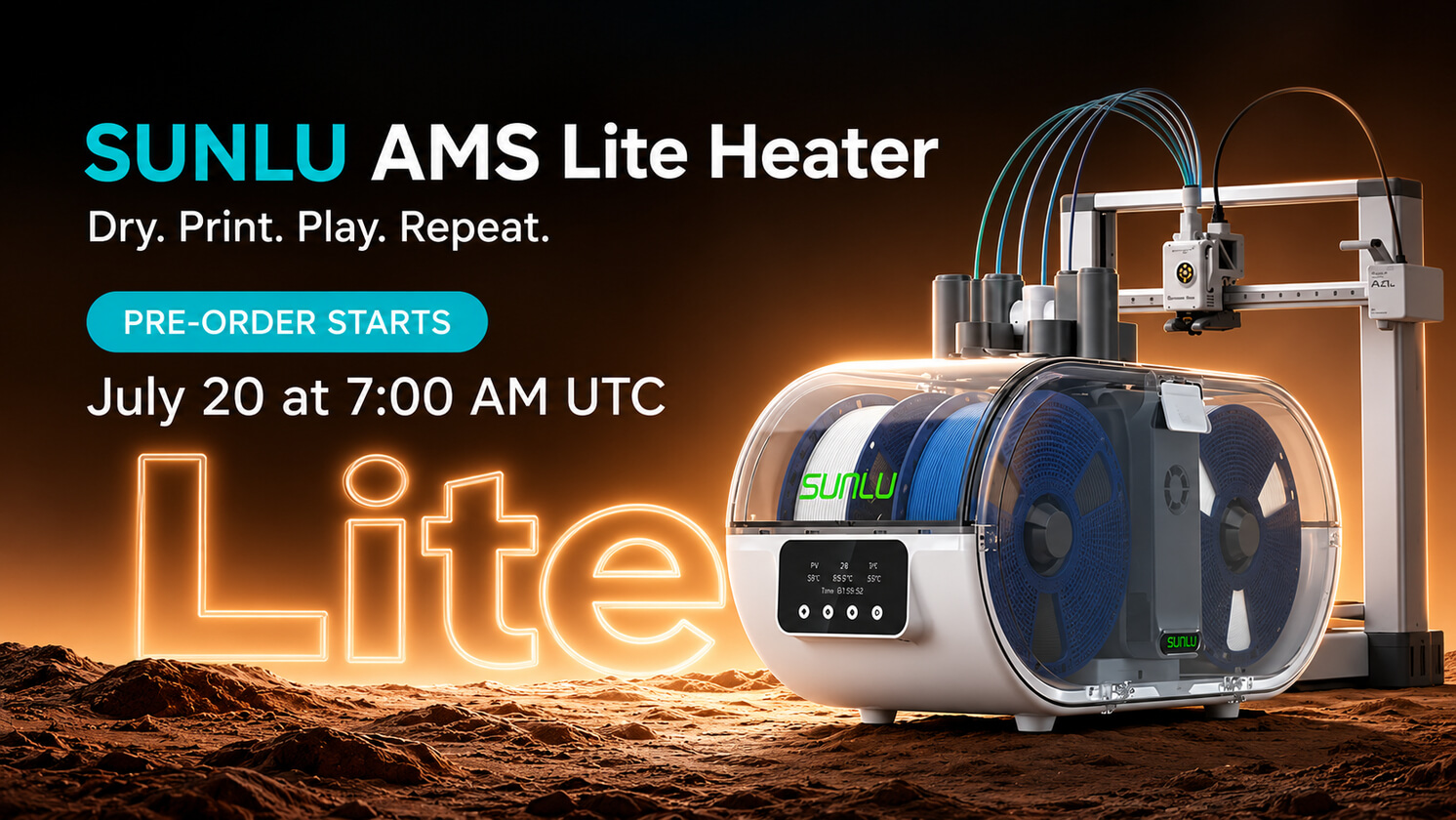
Moisture-affected filament is behind some of the most frustrating problems in FDM 3D printing, including stringing, whitening, and bubbling. These issues can turn an otherwise perfect print into a disappointment, leaving rough, unsightly surfaces and making you spend extra time cleaning up strings and blemishes after every print.That’s exactly the problem SUNLU set out to solve with the AMS Lite Heater, a filament dryer designed to integrate seamlessly with your AMS Lite, launching July 20, 7:00 AM UTC. It is compatible with Bambu A1, A1 Mini, and A2L. The goal is simple: eliminate printing issues, boost your print success rate, and simplify your creation. Print and Dry at the Same TimeTypically, filament drying and printing are two separate steps. You need to dry filament first and then load it into the printer, which can be inconvenient. In addition, the filament can gradually absorb moisture again during printing, especially when the environment is humid.Our AMS Lite Heater addresses the issues by adding a dry-while-printing capability to your AMS Lite without losing any of the original AMS Lite features. You can have cleaner prints and a more convenient user experience. You also save on desk space, since you no longer need a separate external filament dryer running alongside your printer.Wide Drying Temperature Range, Compatible with Different FilamentsThe AMS Lite Heater reaches drying temperatures of up to 70°C and covers the drying needs of nearly every material on the market today, including PLA, PETG, ABS, ASA, PA, PC, and other mainstream 3D printing filaments. With our AMS Lite Heater, you no longer need to switch different filament dryers for different filament types since one device can handle it all. The result is high device utilization and high overall value.Dual-Side, Dual-Airflow Design for Even DryingInstead of a single airflow channel heating from one side, the AMS Lite Heater uses a dual-side, dual-airflow structure that distributes heat across the entire chamber.This eliminates the uneven temperatures and hot/cold spots common in single-channel designs. Hot air circulates with no dead zones and no major temperature gaps across the chamber.We tested the heating uniformity of our AMS Lite Heater by measuring temperatures at eight points across the spool while heating from room temperature (25℃) to 70℃. As shown below, the results confirmed even heat distribution throughout the chamber, with actual readings closely matching the target temperature, validating both the consistency and precision of our heating system.The payoff is consistency: every part of the filament spool dries at the same rate, so you don’t end up with sections that are overdried or underdried. That consistency helps prevent warping, uneven layer formation, and filament breakage, keeping your print quality stable from spool to spool.Smart Auto-Valve for More Efficient DryingBuilt into the AMS Lite Heater is a dedicated smart auto-valve that automatically manages moisture release throughout the drying cycle, eliminating the need for manual vent control.In other words, the AMS Lite Heater can actively release moisture as it’s generated. It prevents water vapor from lingering, pooling, or recirculating back into your filament, which can often occur with passive venting systems.That active approach means faster, more efficient drying cycles, and it makes the process more convenient especially for long print jobs or continuous production runs.Smart Humidity Sensing, Round-the-Clock ProtectionThe AMS Lite Heater comes with a high-precision humidity sensor that continuously monitors chamber conditions. You can set a humidity threshold, and drying kicks in automatically the moment it’s exceeded. This gives you fully automated humidity control: no need for manual monitoring or remembering to switch drying on and off.The result is 24/7 protection against moisture, condensation, and filament degradation, meaning less wasted filament, fewer print defects, and less time spent babysitting your equipment.Safety You Can Trust, Longevity You Can Count OnOur AMS Lite Heater offers comprehensive protection. It features PTC heating (which self-regulates resistance based on temperature, cutting heat automatically at abnormal highs), a PTC temperature-protection switch that disconnects on overheating and resumes once cooled, and dedicated software-level safeguards.Longevity is built in too. Our full-load validation testing shows that, with the AMS Lite Heater installed, the AMS Lite’s internal control board temperature remains below 55°C during continuous operation. Compared with the widely accepted long-term operating guideline of below 90°C for PCB electronic assemblies, the measured temperature remains well within the recommended safe operating range. In other words, there’s little risk of overheating-related failure and you can run the AMS Lite Heater regularly without worrying about it shortening the lifespan of your AMS Lite.Why We Build This Filament DryerAt SUNLU, we understand how frustrating moisture-related defects can be, and our goal has always been simple: simplify your creation.By enabling Print While Drying, our AMS Lite Heater keeps filament continuously dry during the entire print job. The result is significantly reduced stringing, smoother surfaces, and cleaner final models.We are also committed to creating the best possible product. That’s why our AMS Lite Heater comes with four extra 1.2-meter PTFE tubes for guiding filament from the unit to your printer. These tubes provide greater flexibility when arranging your setup, allowing the heater to be placed more freely rather than being fixed next to the printer. Even when used with the A2L, the extra tube length lets you fully open both side doors for easy filament changes, without being restricted by tube length.Get Ready for July 20The SUNLU AMS Lite Heater launches July 20, 7:00 AM UTC. If stringing, print failures, and inconsistent filament quality have been holding your prints back, this is the upgrade built to fix it without giving up anything your AMS Lite already does well.Mark your calendar, and get ready to print smoother, drier, and more reliably than ever.Product Pricing:Super Early Bird Price: USD $99.99 for the first 200 units. Available during the first month of the pre-sale period.Early Bird Price: USD $109.99 for units 201–1,000.Pre-Sale Price: USD $119.99 for units 1,001 and above.Regular Price: USD $129.99 after the first month of the pre-sale period.Click to order now

SUNLU Nylon-Like Resin Review: Best Tough Resin for Durable 3D Printing

Products Review

SUNLU Nylon-Like Resin Review: Best Tough Resin for Durable 3D Printing

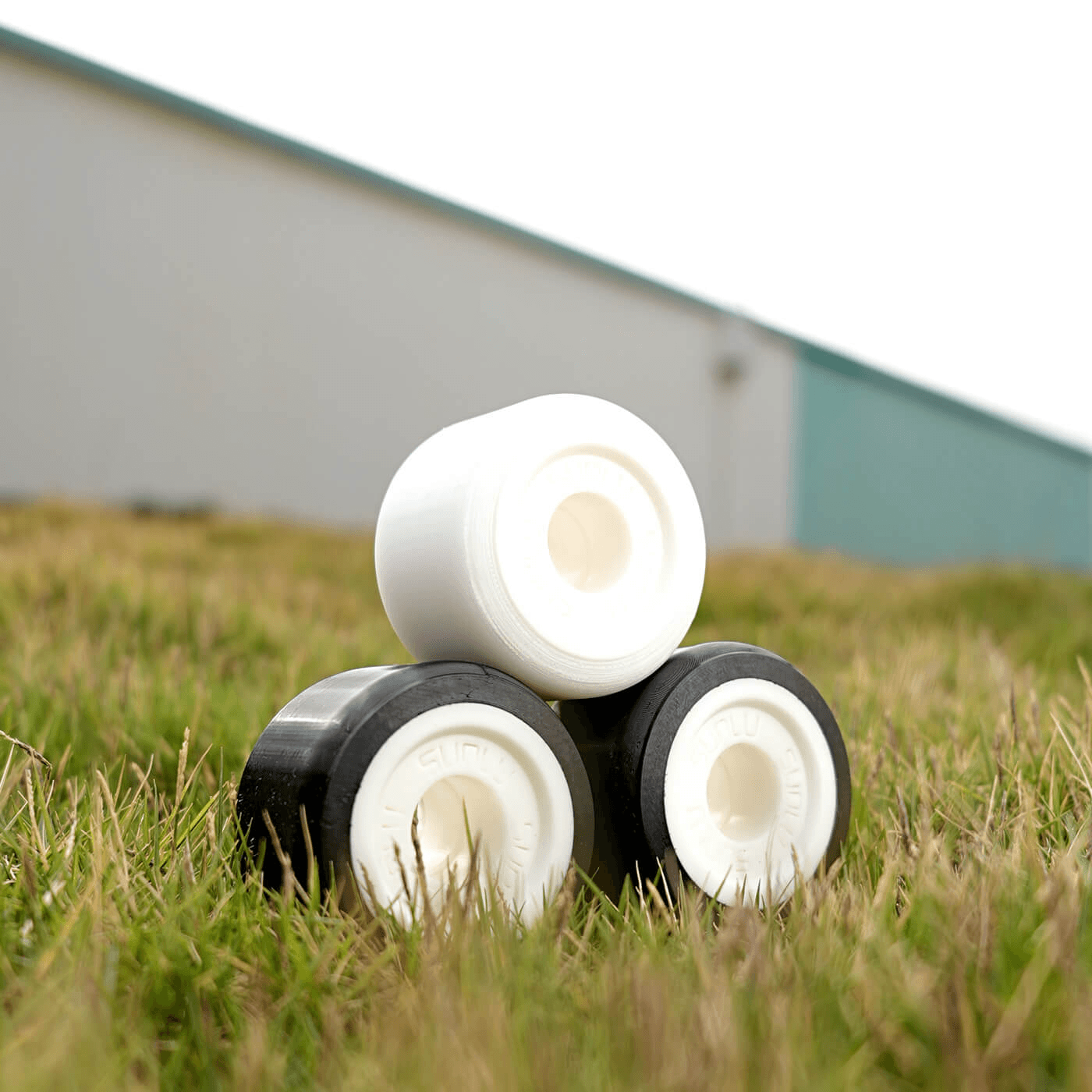
In the world of 3D printing, finding the right resin can make all the difference between fragile prototypes and robust, functional parts. If you're searching for a high-strength 3D printing resin that combines flexibility with unbeatable toughness, SUNLU Nylon-Like Resin (also known as PA-like resin) stands out as a top contender. This 405nm UV-curing resin is engineered for LCD, DLP, and SLA printers, delivering professional-grade results at an affordable price. Whether you're a hobbyist printing miniatures or an engineer crafting structural components, this resin could be your next go-to material. Let's dive into what makes SUNLU Nylon-Like Resin a game-changer.What Is SUNLU Nylon-Like Resin? Key Features and SpecificationsSUNLU Nylon-Like Resin mimics the properties of polyamide (PA) materials, offering superior mechanical performance compared to standard or even ABS-like resins. Here's a breakdown of its standout features:Exceptional Toughness and Strength: With tensile strength ranging from 20-45 MPa and elongation at break of 20-50%, this resin excels in bending, impact resistance, and durability. Prints can withstand punching, tapping, and heavy use without cracking—perfect for functional prototypes or tools.Low Odor and Shrinkage: Unlike some resins that fill your workspace with strong fumes, SUNLU's formula has a minimal scent. It also boasts low shrinkage rates, ensuring precise, warp-free prints every time.Easy Curing and Compatibility: Cures quickly under 395-405nm UV light at room temperature (ideally 25°C). It's compatible with popular printers like Elegoo Mars, Anycubic Photon, and Creality models.Affordable and Accessible: Priced around $40 per 1kg bottle, it's a budget-friendly option without sacrificing quality. Available in colors like black, white, and gray for versatile applications.This nylon-like 3D resin is ideal for projects requiring high hardness, such as automotive parts, mechanical gears, or even cosplay accessories that need to endure real-world stress.Benefits of Using SUNLU Nylon-Like Resin in Your 3D Printing ProjectsWhy choose SUNLU PA-like resin over competitors? Its unique blend of flexibility and rigidity sets it apart. Fresh prints may feel slightly gelatinous, but after full curing, they transform into rigid, resilient pieces that rival injection-molded plastics. Users report phenomenal bending strength— one tester was "quite shocked" at how much force it took to break a print.For miniature enthusiasts, it's a viable alternative to ABS-like resins, producing bendable yet strong models without support pitting. In comparisons, it holds its own against pricier options, though some prefer ABS-like for similar performance at a slight cost increase. Overall, it's praised for reliable printing with existing settings, making it beginner-friendly while satisfying pros.Real User Reviews: What Makers Are Saying About SUNLU Nylon-Like ResinDon't just take our word for it—here's feedback from actual users:"I'm really happy with the results... positive review for this resin." – A detailed tester highlighting its overall performance."Incredibly durable... great price." – From a community forum, noting no issues with supports or pitting."The quality of the prints is excellent... becomes extremely strong and rigid after curing." – Emphasizing the post-cure transformation.On Amazon, it earns a solid 4.3-star rating, with reviewers loving its strength for functional parts. While some note it may not outshine ABS in every test, the consensus is positive for tough applications.How to Get the Best Results with SUNLU Nylon-Like ResinTo maximize your prints:Shake the bottle well before use.Use standard exposure times (adjust based on your printer—start with 6-10 seconds per layer).Post-cure under UV light for 5-10 minutes to achieve full strength.Store at 10-30°C away from direct sunlight.Pro tip: For miniatures, mix it with a bit of standard resin for added detail retention.Final Thoughts: Is SUNLU Nylon-Like Resin Worth It?If you're tired of brittle prints and want a durable 3D printing resin that delivers on strength without breaking the bank, SUNLU Nylon-Like Resin is a must-try. Its PA-like properties make it versatile for everything from prototypes to everyday tools, backed by glowing user testimonials. Ready to upgrade your 3D printing game? Grab a bottle today and experience the difference.