
Most classroom teaching materials are made of paper. While paper is convenient and affordable, materials that are used frequently can quickly become crumpled, torn, bent, or worn out. For teaching tools that need to be handled again and again, replacing them every time they become damaged can be both inconvenient and wasteful.
I wanted to find a better solution, so I decided to recreate my classroom materials with 3D printing.
Instead of continuing to print and replace the same paper materials, I designed and 3D printed reusable versions that could better withstand everyday classroom use. This gave me the opportunity to turn simple teaching materials into durable tools that can be used repeatedly.
Turning Everyday Teaching Materials into 3D-Printed Tools
The process started with the materials I already used in the classroom. I looked at which paper-based items were most likely to get damaged and thought about how their shapes and functions could be recreated with 3D printing.
After designing the models, I printed them using PLA 2.0 in Klein Blue, Red, and White. The three colors also made it easier to distinguish different parts and added a more visual and engaging element to the teaching materials.
3D printing gave me much more freedom than simply printing on paper. I could adjust the size, shape, thickness, and details of each piece according to how it would actually be used. If something needed to be changed, I could simply modify the design and print an updated version.
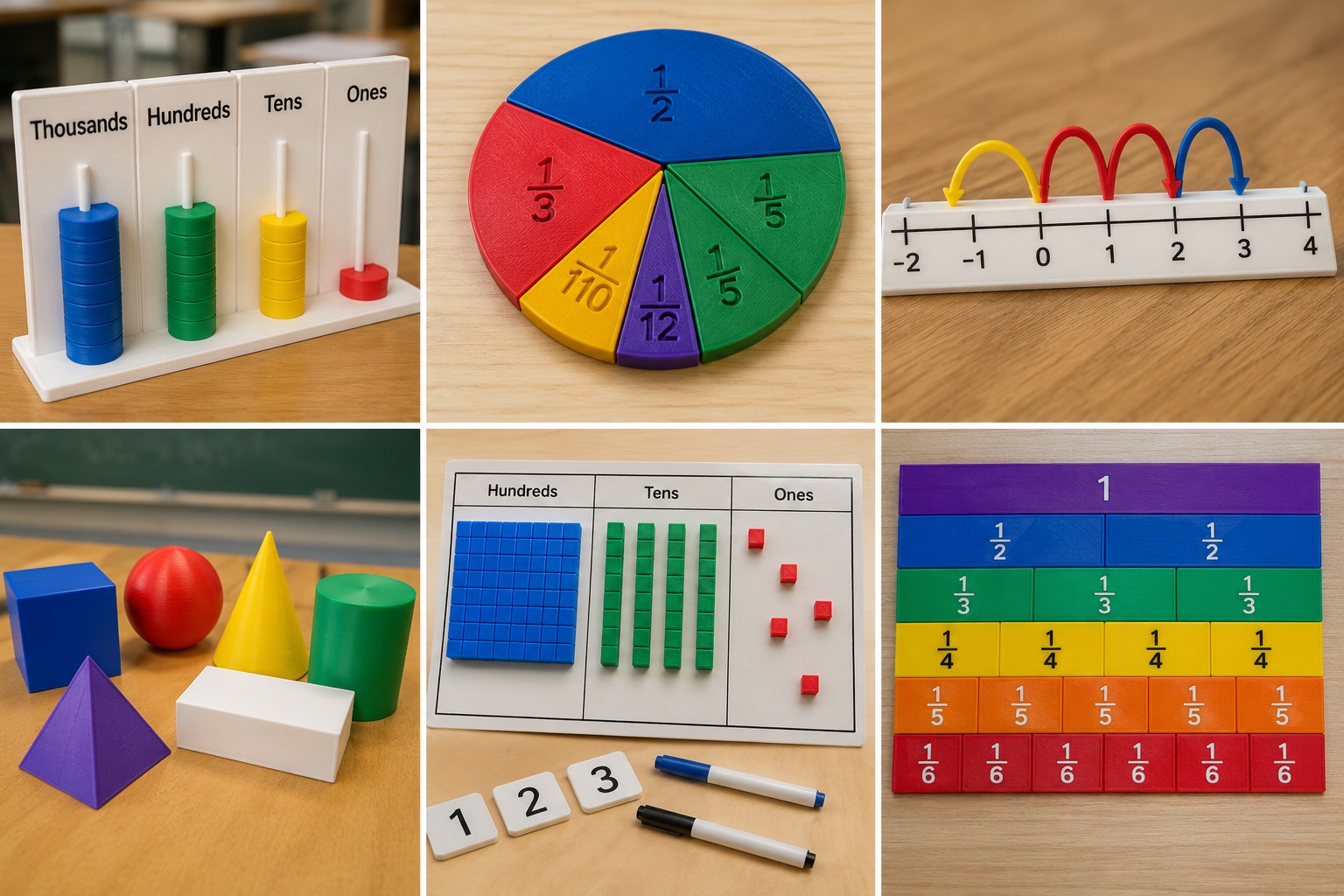
Designed for Repeated Use
One of the biggest advantages of switching from paper to 3D-printed materials is durability.
Paper materials can be easily damaged when students handle them repeatedly. Corners get bent, surfaces become worn, and eventually the entire material may need to be replaced. The 3D-printed versions are much better suited to repeated handling and can be used over and over again.
This makes the materials more practical for everyday classroom activities. Instead of preparing new paper materials each time, I can simply bring out the 3D-printed pieces and use them again.
The ability to reuse the same materials also means less paper waste and fewer replacements over time.
Making Learning More Hands-On
Another unexpected benefit is that 3D printing makes the teaching materials more tangible.
Students can physically hold, move, and interact with the objects instead of only looking at something printed on a sheet of paper. This creates more opportunities for hands-on learning and makes the materials feel more engaging.
The different colors of Klein Blue, Red, and White also help make individual pieces easier to recognize and organize. Simple visual differences can make a big difference when materials are being used in a busy classroom environment.
A Small Change with a Bigger Impact
For me, this project is not about completely replacing paper in the classroom. Paper still has its place and remains useful for many types of teaching materials.
Instead, it's about identifying the materials that are used frequently and finding a more durable alternative for them.
By recreating these items with 3D printing, I was able to give them a longer lifespan while also reducing the need to repeatedly print and replace damaged materials. It's a small change, but one that makes everyday teaching a little more practical and sustainable.
More importantly, the project showed me how 3D printing can go beyond making decorative objects or prototypes. With a little creativity, it can be used to solve very ordinary problems and create useful tools for everyday life.
From a simple sheet of paper to a reusable 3D-printed teaching tool, the goal is simple: make learning materials last longer, work better, and create less waste.
Materials Used
- Filament: PLA 2.0
- Colors: Klein Blue, Red, White
- Application: Classroom Teaching Materials
- Key Benefits: Durable, Reusable, Customizable, More Sustainable