
The surface of a 3D print is shaped by more than color. Material composition, pigment distribution, layer geometry, temperature, speed, and lighting all influence how the finished object looks and feels. This is why two types of 3D printing filament can produce noticeably different results even when they are printed from the same model.
What Is a 3D-Printed Surface Effect?
A surface effect is the combined visual and tactile character of a printed part. It includes gloss, color variation, apparent depth, visible layer lines, and textures such as stone-like speckles or wood-like grain.
Some effects are mainly optical. Metallic and galaxy filaments, for example, contain pigments that interact with light to create shine, sparkle, or color shifts. Other effects also depend on solid additives. Marble filament may contain contrasting mineral-like particles, while wood filament can include fine wood powder.
Moreover, the pigments and solid additives change how noticeable the layer structure is. A scattered pattern can visually break up layer lines, while a reflective finish may emphasize every curve and extrusion path.
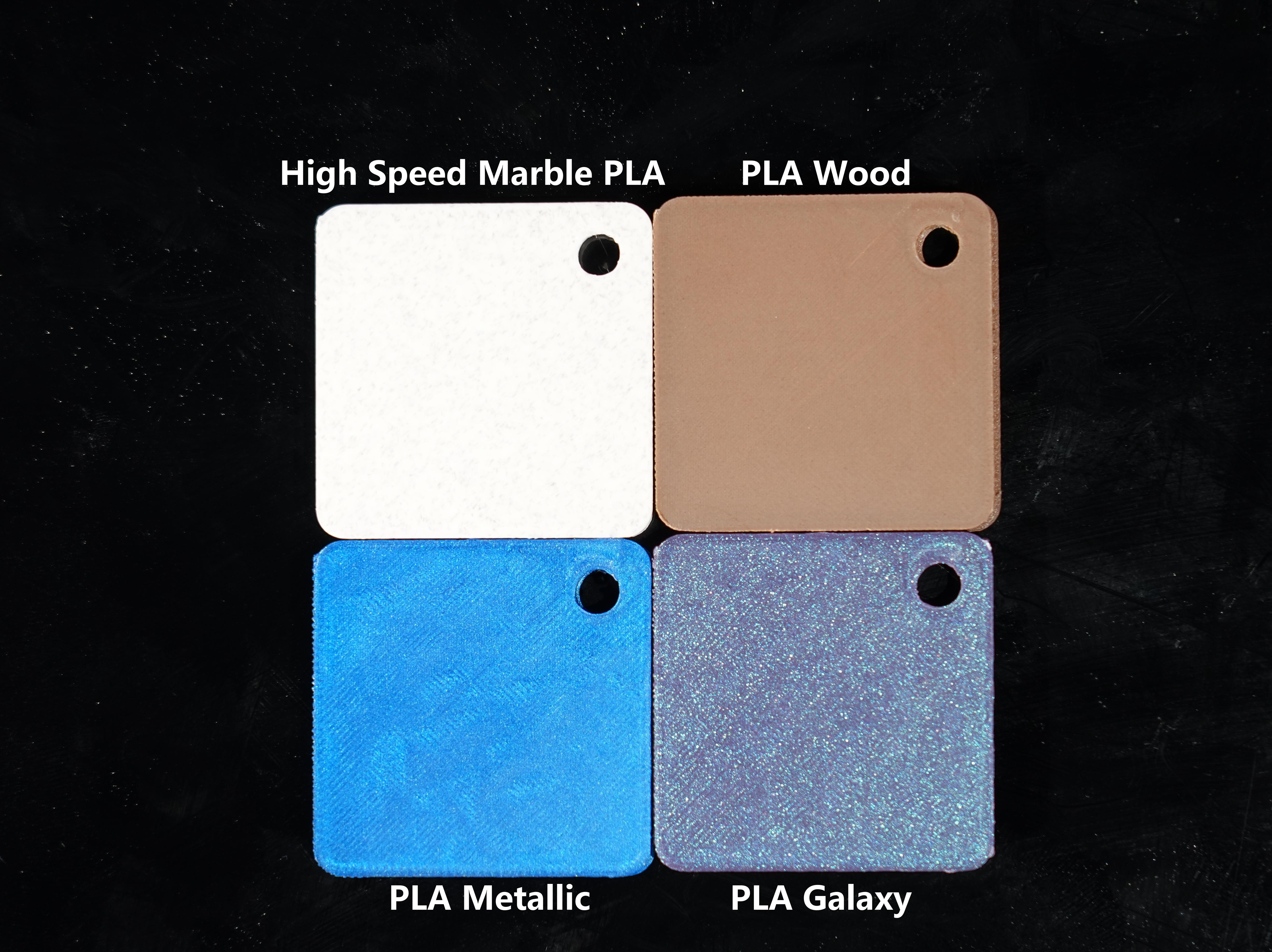
As a result, the same model can look and feel very different depending on the filament used. The image below compares the surface effects produced by SUNLU High Speed Marble PLA, SUNLU PLA Metallic, SUNLU PLA Galaxy, and SUNLU PLA Wood:
What Determines the Final Surface?
Material composition creates the basic effect, but it is only the starting point. The final appearance depends on several connected factors:
- The base polymer determines flow behavior and the general gloss of the surface.
- Pigments and particles create color variation, sparkle, or natural-looking texture.
- Layer height controls the size and visibility of individual layer steps.
- Nozzle temperature affects flow, bonding, and sometimes surface shine.
- Print speed influences how evenly each extrusion line is deposited.
- Cooling changes how quickly the material solidifies.
- Model orientation determines how light reaches the layer lines and decorative pattern.
This means the appearance shown on a filament spool is not an exact preview of the finished part. The same material can look smooth and understated on a gently curved vase but more strongly layered on a flat wall or shallow slope.
How Special-Effect Filaments Create Their Appearance
1. Marble Filament
Marble-style filament combines a light or stone-colored base with small contrasting particles. As the material is extruded, these particles appear as irregular dots and streaks. The random pattern resembles natural stone and helps interrupt the visual continuity of layer lines.
Marble filament works especially well for sculptures, architectural models, plant pots, museum-style replicas, and decorative household objects. Larger surfaces usually display the pattern more clearly than very small parts.
Because some marble formulations contain solid particles, users should check the manufacturer’s nozzle and maintenance recommendations before printing long jobs.
2. Metallic Filament
“Metallic” can describe two different material categories. Metallic-look filament uses reflective pigments or additives to imitate the luster of metal while retaining a polymer base. Metal-filled filament contains actual metal powder and may have different printing, nozzle-wear, weight, and post-processing requirements.
Metallic-look PLA is a practical choice when appearance matters more than real metal content. Its reflective surface can make curved objects look polished and can give figurines, trophies, cosplay accessories, mechanical display models, and decorative components a cast-metal character.
Light direction is important. Broad curves often show a smooth highlight, while uneven extrusion or inconsistent layers may become more visible on a reflective surface.
3. Galaxy Filament
Galaxy filament creates visual depth through reflective or color-shifting pigments distributed through the base material. As the viewing angle or light direction changes, different areas may brighten, darken, sparkle, or reveal another tone.
This effect is well suited to astronomy models, fantasy objects, jewelry holders, vases, toys, and display pieces. Models with curves, folds, or faceted geometry usually demonstrate the shifting effect more clearly than simple flat panels.
4. Wood Filament
Wood filament blends a thermoplastic with fine wood particles. The particles soften the uniform plastic appearance and produce a warmer, more organic color and texture. Some formulations may also retain a subtle wood-like scent during or after printing.
Layer direction can resemble grain, especially on models with long contours. Wood-style filament is therefore suitable for architectural models, signs, boxes, ornaments, terrain pieces, and decorative objects.
Wood-filled materials require attentive temperature control. Excessive heat or long residence time in the nozzle can discolor the material and may increase the chance of residue or clogging.
To show how filament composition changes the finished surface, the same model was printed with SUNLU Marble, PLA Metallic, PLA Galaxy, and PLA Wood. Under consistent lighting, Marble produces a stone-like speckled pattern that helps soften visible layer lines, while Metallic creates stronger reflective highlights across curved surfaces. Galaxy adds sparkle and shifting visual depth, whereas Wood gives the model a warmer, more natural-looking texture. Although the model geometry remains identical, each 3D printing filament changes how its curves, layers, and fine details are perceived.
How to Choose Filament for Your Target Result
Choose the material by working backward from the finished object:
| Target Effect | Suitable Filament | Typical Applications |
|---|---|---|
| Natural stone with subdued layer lines | Marble PLA | Sculptures, planters, architecture |
| Polished or cast-metal appearance | Metallic-look PLA | Props, trophies, display models |
| Sparkle and changing color under light | Galaxy PLA | Vases, fantasy models, ornaments |
| Warm, organic texture | Wood PLA | Signs, boxes, décor, scale models |
Also consider the model’s geometry. Reflective materials reward smooth curves, galaxy effects benefit from changing angles, and patterned marble surfaces work best when there is enough area to show their particle distribution.
For functional parts, appearance should not replace mechanical evaluation. Check the base material’s strength, heat resistance, layer adhesion, and environmental suitability separately.
How to Improve the Finished Surface
Print a small sample before committing to a large model. A swatch reveals how the filament behaves under your actual lighting, printer settings, and layer orientation.
Keep the exterior wall speed stable, place the seam in a less visible location, and use a layer height appropriate for the viewing distance. Make sure the filament is stored correctly, because moisture can contribute to bubbling, rough extrusion, and inconsistent gloss.
Post-processing should match the effect. Wood-style parts can often be sanded for a softer appearance, while sanding a galaxy or metallic surface may remove or dull the optical finish. Test any sanding, polishing, coating, or painting process on a sample first.
Explore Special-Effect Filaments from SUNLU
SUNLU offers several materials designed for appearance-focused projects. SUNLU High Speed Marble PLA uses inorganic microparticles to create a stone-like pattern. SUNLU PLA Metallic provides a metal-like surface in colors such as Marrakech Bronze, Brass Gold, and Azurite.
For changing color and light effects, SUNLU PLA Galaxy uses an iridescent formulation intended for decorative prints. SUNLU PLA Wood contains 15% wood powder and is available in several wood-inspired colors.
The right 3D printing filament connects material composition with the intended visual result. Select the effect that suits your model, begin with the recommended printing profile, and refine temperature, speed, cooling, and layer height through small test prints. This controlled approach is the most reliable way to turn a special-effect spool into a convincing finished surface.