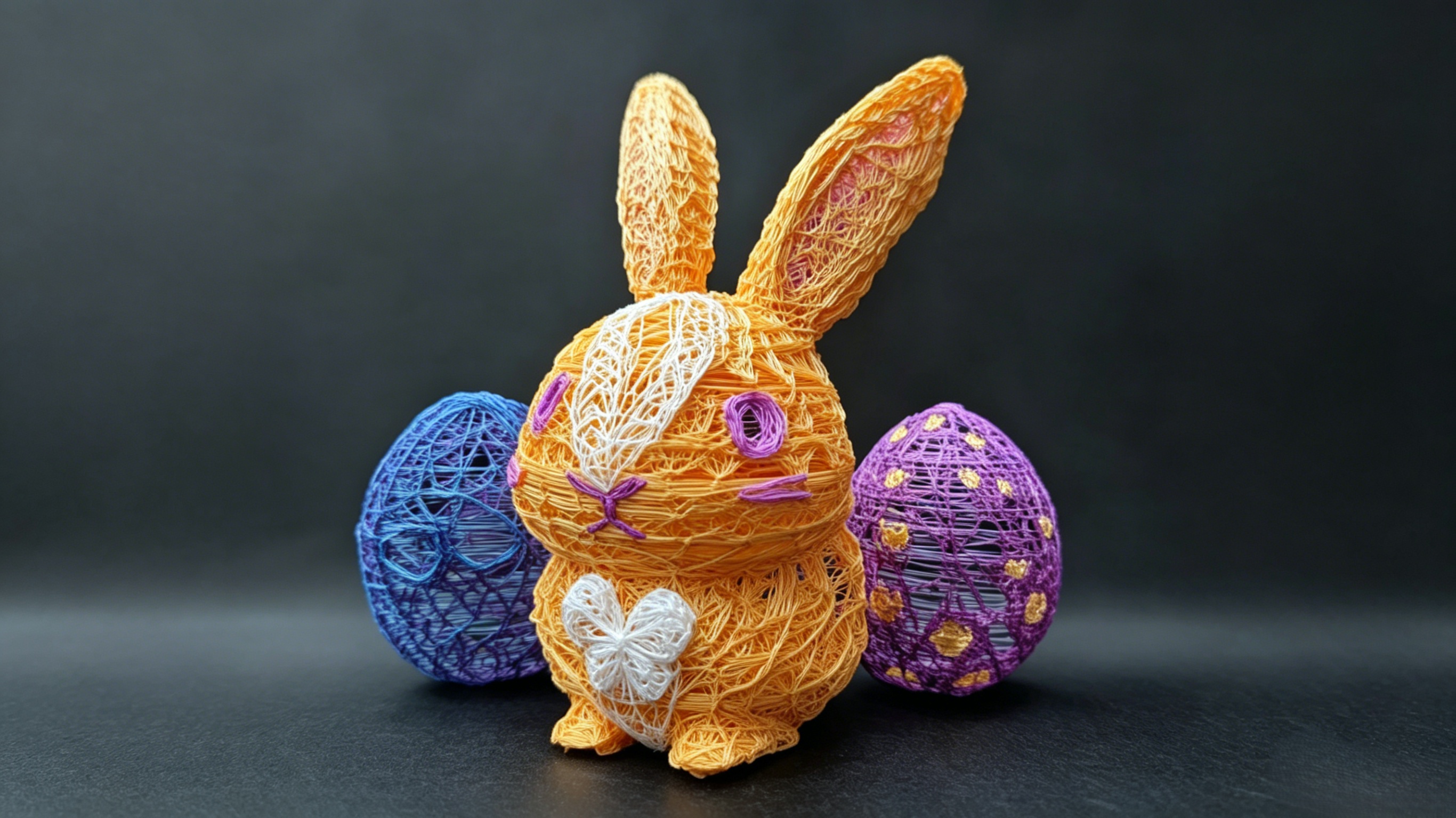
A 3D pen is a handheld device that allows users to manually create three-dimensional objects by extruding heated thermoplastic material. It operates on the same basic principle as Fused Deposition Modeling (FDM), but instead of automated motion, the user controls the movement by hand.
The pen heats plastic filament (such as PLA or ABS) to a molten state and extrudes it through a pen tip. As the material exits the pen tip, it cools and solidifies quickly, allowing users to “draw” structures in three dimensions.
How It Works
1. Filament feeding: Thermoplastic filament is inserted into the pen and driven toward the heated nozzle.
2. Heating and extrusion: The filament is melted and extruded as a thin strand.
3. Manual shaping: The user guides the pen to create shapes layer by layer or freehand in space.
4. Cooling and solidification: The extruded material cools rapidly, holding its shape.

Key Characteristics of 3D pen
Advantages
1. Easy to use and highly accessible, suitable for beginners and educational use
2. Creative freedom, allowing freehand drawing in 3D space
3. Portable and low-cost compared to 3D printers
4. Quick prototyping for simple ideas or repairs
Limitations
1. Low precision and repeatability compared to automated 3D printing
2. Limited structural strength for functional parts
3. User skill-dependent results
4. Restricted to basic thermoplastic materials
Typical Applications
- Educational tools for learning 3D concepts
- Artistic creation and crafts
- Simple model making and decoration
- Quick fixes or joining printed parts