

Prototyping
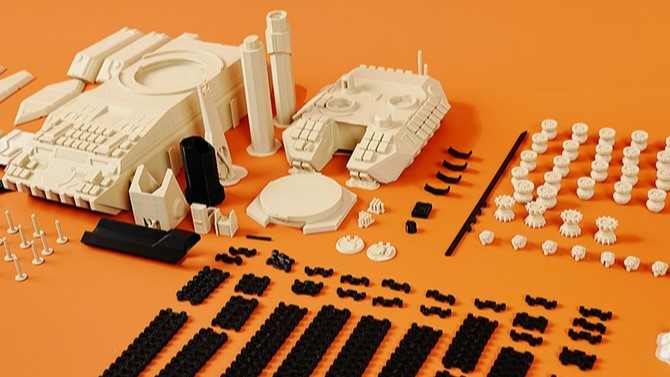
What Is 3D Printing Prototyping?
3D printing prototyping refers to the process of turning a digital design into a physical model quickly using additive manufacturing, most commonly FDM. Instead of relying on molds or complex machining, a prototype can be produced within hours. In practical terms, it enables an iterative workflow: design, test, and refine in rapid cycles. This makes 3D printing particularly well-suited for product designers, engineering teams, and early-stage concept validation.
What Can Prototyping Be Used For?
1. Concept Visualisation
Quickly produce a physical model to evaluate appearance, ergonomics, and dimensional accuracy.
2. Functional Testing
Use stronger materials to assess load-bearing capacity, deformation, and assembly fit. This serves as a cost-effective alternative to traditional sampling methods.
3. Design Optimization
Iterate on structures, internal geometries (e.g., infill or hollow sections), and external forms. Compared to conventional manufacturing, 3D printing offers far greater design flexibility with fewer constraints.
4. Tooling and Fixtures
Produce jigs, fixtures, and automation components directly, improving production efficiency without additional tooling costs.
Why Use 3D Printing for Prototyping?
1. Speed
Functional prototypes can be produced within hours.
2. Cost Efficiency
No tooling is required, and material waste is minimal. This is especially advantageous for low-volume production and repetitive development.
3. Material Versatility
Different materials support different testing needs:
- PLA for rapid concept validation
- PETG or ABS for functional testing
- Carbon fiber-reinforced materials for high-strength applications
How to Improve Prototyping Efficiency?
1. Optimize Infill Density
- ~20% infill for faster, material-efficient prints
- Higher infill or more perimeters for strength-critical testing
- Optimize print orientation and extrusion parameters to improve layer bonding and overall strength
2. Test Multiple Variants Simultaneously
Print several design versions in one batch to accelerate comparison and decision-making.
3. Minimize Waste
3D printing is an on-demand process with high material utilization, supporting more sustainable production practices.
Why PLA Is Ideal for Prototyping
1. Ease of Printing
PLA prints at lower temperatures, with minimal warping and a high success rate, making it ideal for rapid iteration.
2. Cost and Speed Advantages
It is inexpensive and enables fast turnaround times.
3.Strong Visual Quality
Available in matte, silk, and multi-color finishes, PLA is well-suited for presentation models and visual validation.
Functional Parts Manufacturing
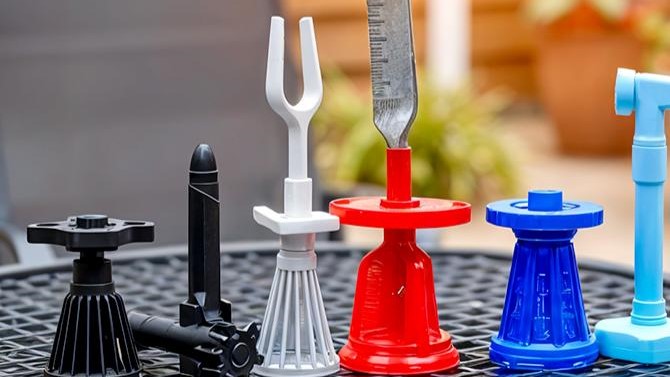
What Are Functional Parts in 3D Printing?
Functional parts are components that can be used directly after printing, rather than serving as visual or display models. In other words, they are designed to perform a practical function.
Typical examples include brackets, connectors, fixtures, and replacement parts: components that are intended to operate under real-world conditions.
What Can Functional Parts Be Used For?
1. Equipment Components
3D printing can replace traditionally manufactured parts in many scenarios, such as clips, connectors, enclosures, and structural elements. Damaged parts can be reproduced quickly without waiting for external suppliers.
2. Tooling and Fixtures
Custom jigs, positioning fixtures, and assembly aids can be produced on demand. These are widely used in automated production lines to improve efficiency and reduce operational costs.
3. Household Applications
Functional items such as storage brackets, hooks, or replacement parts for appliances can be printed as needed, eliminating the need to replace entire products.
4. Structural and Load-Bearing Parts
Components such as support brackets, frames, and mechanical connectors require higher strength and stability, making material selection and print strategy critical.
Why Use 3D Printing for Functional Parts?
1. Speed
Parts can be designed, printed, and deployed within the same day, without tooling or machining delays.
2. Cost Efficiency
3D printing is particularly cost-effective for low-volume production, with no need for inventory or molds.
3. Design Freedom
Complex geometries, internal cavities, and integrated structures can be produced without the limitations of traditional manufacturing.
4. On-Demand Production
Parts are manufactured only when needed, reducing waste and improving supply chain flexibility.
Recommended Materials for Functional Parts (SUNLU) :
1. PLA / PLA+ / PLA+ 2.0
Suitable for light-load structures and general-use parts. Easy to print and cost-effective, ideal for non-critical applications.
2. PETG
Offers improved durability and impact resistance. Suitable for parts under moderate stress and long-term use, with better resistance to cracking and environmental exposure.
3. ABS / ASA
Designed for higher-temperature environments and outdoor use. Commonly used for enclosures and external components. ASA provides enhanced UV resistance.
4. Nylon / Carbon Fiber Composites
Engineering-grade materials for high-strength, wear-resistant, and dimensionally stable parts. Suitable for demanding mechanical and industrial applications.
How to Improve the Reliability of Functional Parts?
1. Increase Infill Density
Higher infill generally improves mechanical strength, especially for load-bearing components.
2. Optimize Print Orientation
Because parts are built layer by layer, strength is weaker along the Z-axis. Orient the model to align load paths with stronger XY layers.
3. Select Appropriate Materials
Avoid using aesthetic-focused materials (e.g., silk PLA) for functional applications, as they typically lack the required mechanical properties.
Appearance Models & Displays
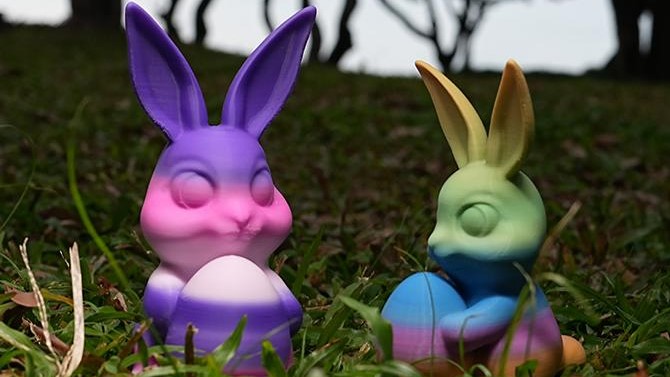
What Are Appearance Models in 3D Printing?
Appearance models are 3D printed objects created primarily for visual presentation rather than mechanical performance. The focus is on aesthetics—surface quality, detail reproduction, and overall finish—rather than strength or load-bearing capability.
In simple terms, the priority is how realistic, refined, and visually appealing the model looks, not how durable it is.
What Are Appearance Models Used For?
1. Presentation Models
Used for product design validation, concept demonstrations, and client presentations, where visual accuracy is critical.
2. Figurines and Display Pieces
Includes character models, collectible figures, and decorative items, often emphasizing fine details and artistic quality.
3. Architectural and Scene Models
Applied in architectural mockups, dioramas, and urban planning models, where scale, proportion, and visual coherence are key.
4. Creative and Customized Gifts
Personalized items and artistic creations that prioritize visual impact and design expression.
Key Considerations for Appearance Models:
1. Surface Quality
Smoothness and the visibility of layer lines or surface roughness.
2. Detail Resolution
The ability to accurately reproduce fine features, such as facial details or textures.
3. Color and Finish
Visual appeal, including color options and material-specific finishes.
4. Post-Processing Compatibility
Ease of sanding, painting, and other finishing processes to enhance the final appearance.
Why 3D Printing Is Suitable for Appearance Models?
1. Rapid Visualization
Physical models can be produced within hours after design completion.
2. Cost Efficiency
Lower cost compared to molding or manual fabrication, making it suitable for iterative refinement.
3. Customization
Flexible adjustments in size, color, and design details.
4. Design Freedom
Complex geometries can be produced with fewer limitations compared to traditional manufacturing methods.
Recommended Materials for Appearance Models (SUNLU) :
1. PLA
The most widely used material. Stable, easy to print, and suitable for general display models and entry-level figurines.
2. Matte PLA
Provides a smooth, non-reflective surface, ideal for premium-looking models and product presentations.
3. Silk PLA
Offers a glossy finish with enhanced visual appeal, suitable for decorative and artistic pieces.
4. Rainbow and Glow-in-the-Dark PLA
Adds visual variety and uniqueness, making them ideal for creative models and personalized displays.
Education
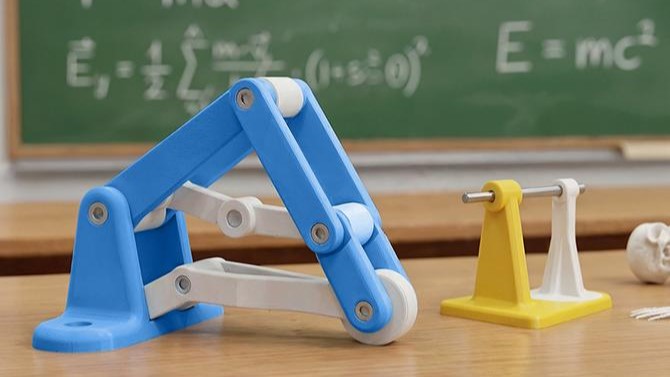
What Is 3D Printing in Education?
3D printing in education is not only a manufacturing tool but also a learning tool. It transforms abstract concepts into physical objects that can be seen, touched, and interacted with.
In essence, it shifts learning from passive understanding through reading to active, hands-on exploration.
What Can Students Learn with 3D Printing?
1. Science and Engineering
Concepts such as mechanical structures, gears, transmission systems, and physical models can be visualized and understood through tangible objects.
2. Mathematics and Spatial Reasoning
Geometric models, complex surfaces, and 3D structures help improve spatial visualization and comprehension.
3. Design and Engineering Thinking
Students can learn the full workflow from product design to manufacturing, including structural optimization and prototyping.
4. Creativity and Art
Applications include sculpture, creative projects, and personalized designs, combining artistic expression with technical skills.
5. Project-Based Learning
Widely used in school projects, maker education, and DIY experiments, emphasizing a “learning by doing” approach.
Why 3D Printing Is Suitable for Education?
1. Makes Abstract Concepts Tangible
Complex ideas such as force distribution, structure, and spatial relationships can be directly demonstrated with physical models.
2. Encourages Hands-On Learning
Students participate in the entire process—from design to printing to iteration—gaining practical experience.
3. Increases Engagement
Compared to traditional lectures, interactive and hands-on activities are more engaging and encourage active learning.
4. Supports Personalized Learning
Each student can design and create their own models, allowing for flexible pacing and individualized exploration.
Typical Educational Applications:
1. Classroom Teaching Aids
Biological models (organs, skeletons), geographic models, and physical structures to support instruction.
2. Student Projects and Competitions
Used in science fairs, maker projects, and innovation challenges.
3. Campus and Lab Applications
Custom tools, experimental devices, and maker space resources within educational institutions.
Recommended Materials for the Education Field (SUNLU) :
1. PLA+ / PLA+ 2.0
Tougher than standard PLA and less prone to breaking, making it suitable for reusable teaching tools.
2. TPU
Flexible and elastic, ideal for demonstrating specific use cases that require deformation or soft materials.
3. Carbon Fiber Composites
High-strength materials suitable for competition-level projects and for teaching structural design and engineering concepts.
Toys & Creative Products
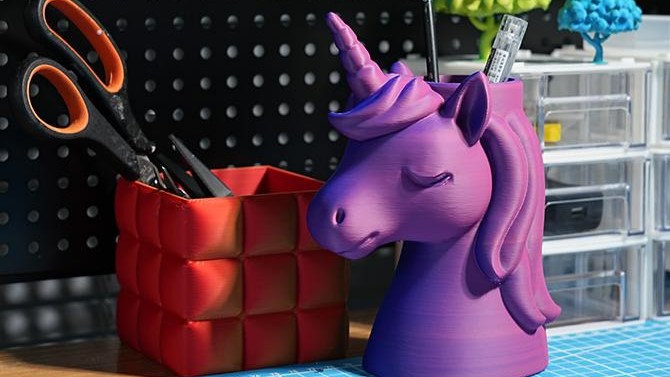
What Are 3D Printed Toys and Creative Products?
3D printing makes it easy to create toys and creative items independently. Instead of purchasing ready-made products, users can design, customize, and manufacture their own ideas.
In essence, it enables the transformation of concepts into physical objects that can be played with, displayed, or shared.
What Types of Toys and Products Can Be Created?
1. Entertainment Toys
Includes fidget toys, puzzles, building blocks, and articulated models. The focus is on interactivity and playability.
2. Mechanical Creative Devices
Gear systems, marble runs, and simple mechanical models that combine entertainment with basic engineering principles.
3. Personalized Products
Custom keychains, nameplates, and personalized gifts. Each item can be uniquely tailored to the user.
4. Decorative and Artistic Items
Creative ornaments, small sculptures, and design-focused pieces that emphasize aesthetics and originality.
Why 3D Printing Is Suitable for Toys and Creative Products?
1. High Design Freedom
Complex shapes and mechanisms can be created with minimal structural limitations.
2. Customization
Users can easily modify dimensions, colors, and structures, enabling fully personalized outputs.
3. Low Cost
Most items require only small amounts of material, making experimentation and iteration affordable.
4. Reproducibility and Repairability
Broken parts can be reprinted, and designs can be duplicated as needed, reducing long-term usage costs.
Recommended Materials for Toys (SUNLU) :
1. PLA / PLA+ / PLA+ 2.0
Easy to print with a wide range of colors. Suitable for puzzles, decorative items, and general-purpose toys.
2. TPU
Flexible and elastic, ideal for soft toys and stress-relief products.
3. Specialty Materials (Silk / Glow-in-the-Dark)
Enhance visual appeal and creativity, making them suitable for decorative items and gift applications.
4. Matte PLA
Provides a refined, non-glossy finish that improves the perceived quality and aesthetics of printed toys.